In today’s rapidly evolving AI farms, energy efficiency is a critical concern for operators who handle massive data processing and high-speed computations. At Liobate, we focus on integrating TFLN Devices into AI infrastructure to address energy consumption challenges while maintaining ultra-high performance. By leveraging our expertise in thin-film lithium niobate technology, our high speed optical modulator solutions provide significant improvements in signal modulation efficiency, allowing AI farms to reduce electrical load and enhance overall operational sustainability. The adoption of our TFLN Devices ensures that energy-intensive workloads are managed more efficiently, contributing directly to the long-term energy goals of modern AI facilities.
High-Speed Optical Modulators for Low-Power Operations
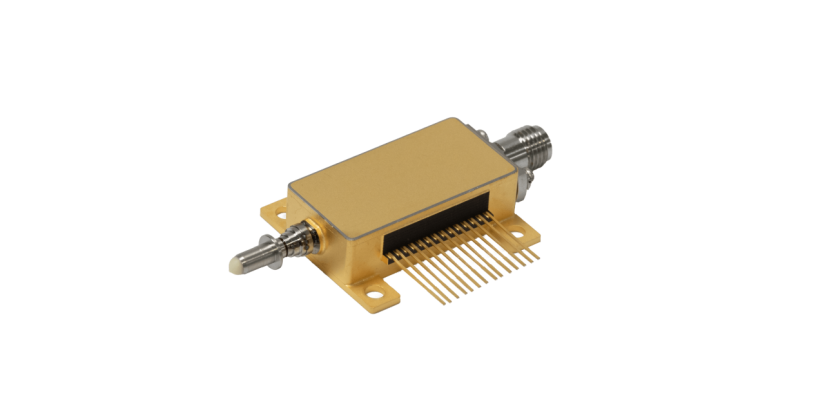
Our company offers a 20/40 GHz Intensity Modulator with Build-in LD, designed to meet the stringent requirements of AI-driven optical networks. With a 3dB-bandwidth of 40 GHz, a half-wave voltage below 3.0 V, and an integrated low-RIN light source, our high speed optical modulator delivers high fidelity signal transmission with minimal energy loss. The output optical power at the ON state reaches 12 dBm, ensuring reliable performance for demanding AI workloads. These technical specifications highlight the role of Liobate in providing scalable, low-power photonic solutions that help AI farms operate more sustainably while keeping up with evolving computational demands.
Integration in AI Data Centers and Optical Networks
We understand that AI farms require not only high-speed data transfer but also optimized energy management. By implementing TFLN Devices from Liobate, AI data centers can integrate high speed optical modulators into existing optical networks without sacrificing performance. Our solutions support ultra-low loss and low-power modulation, making them ideal for high-bandwidth applications such as 400G, 800G, and beyond. The modularity of our 20/40 GHz Intensity Modulator with Build-in LD allows seamless deployment in dense optical networks, ensuring energy-efficient operation across multiple computational clusters. This integration approach enables AI farm operators to meet sustainability targets while maintaining the high-speed connectivity required for next-generation AI workloads.
Conclusion: Advancing Energy Goals with Liobate
In conclusion, achieving energy goals in AI farms requires a combination of cutting-edge photonic technologies and practical deployment strategies. Liobate provides TFLN Devices and high speed optical modulators that deliver low-power, high-performance solutions suitable for modern AI applications. By using our 20/40 GHz Intensity Modulator with Build-in LD, operators can optimize energy consumption without compromising on speed or bandwidth. The integration of our products into AI farm infrastructure ensures that energy targets are met efficiently while supporting the continuous growth of AI workloads. Our approach demonstrates that sustainable AI operations are achievable with the right photonic solutions, reinforcing Liobate’s commitment to energy-conscious, high-performance optical modulation.


 The previous article
 Returns the list