As the telecommunications and data center industries transition toward 800G and 1.6T architectures, the optical power levels circulating through integrated photonic circuits have increased significantly. While higher power levels are often necessary to maintain an acceptable Optical Signal-to-Noise Ratio (OSNR) over long distances, they also introduce unique operational risks. At Liobate, we recognize that managing the optical and electrical inputs of a high-performance IQ modulator requires a rigorous approach to safety and precision. By adhering to established operational protocols and utilizing the inherent material advantages of TFLN Devices, we can achieve high-capacity transmission without compromising the structural integrity of the hardware.
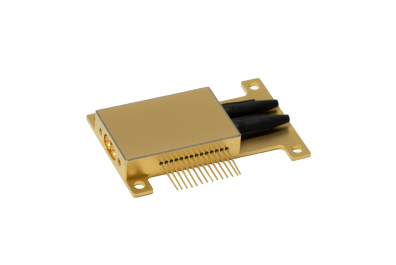
The Physics of High-Power Handling in Integrated Optics
When we discuss "high-power" in the context of an IQ modulator, we are typically referring to input optical powers that can reach up to +20 dBm or higher. At these levels, the power density within the sub-micron waveguides of a Thin Film Lithium Niobate chip is immense. If the input alignment is not perfect, or if there is contamination at the fiber-to-chip interface, the concentrated light can cause localized heating. This phenomenon, often referred to as "optical fuse" or facet damage, can permanently degrade the device's performance.
Our engineering team at Liobate has optimized the waveguide geometry to handle higher power densities compared to traditional silicon photonics. However, operational safety begins with the user. We emphasize that before any high-power laser is engaged, the input coupling must be verified at a low-power setting (typically < 0 dBm). This ensures that the light is correctly launched into the waveguide core rather than the cladding or the substrate, where it could cause thermal stress. By prioritizing these initial alignment steps, we protect the long-term reliability of the IQ modulator and the surrounding optical assembly.
Thermal Management and Bias Stability Under High Load
High optical power levels do not just threaten the physical facets; they also impact the internal electro-optic stability of the device. A significant portion of the input light is absorbed by the material and converted into heat. In a complex IQ modulator structure, this thermal load can lead to localized refractive index changes, which manifest as bias drift. If the DC bias points are not strictly managed, the resulting carrier leakage can cause the constellation to degrade, leading to high-power-induced signal distortion.
To mitigate this, we have designed our TFLN Devices with a focus on high thermal conductivity and stability. Thin Film Lithium Niobate exhibits superior power handling compared to many organic or polymer-based alternatives. However, for B2B deployments in high-density line cards, we recommend the use of active thermal monitoring. Our integrated monitor photodiodes (MPD) allow for real-time tracking of the internal optical power levels. When combined with an automated bias control (ABC) circuit, the system can dynamically compensate for any thermally induced phase shifts. This closed-loop management is essential for maintaining a stable 64-QAM or 128-QAM signal under continuous high-power operation.
Electrical Input Safety and RF Driving Protocols
While optical safety is paramount, the electrical inputs of the IQ modulator also require careful management. Modern high-order modulation formats require high-speed RF drivers that can deliver significant swing voltages. An implementation error often seen in the field is the application of excessive RF power, which can lead to dielectric breakdown within the electrode structure. At Liobate, our modulators are designed with a low half-wave voltage, typically requiring less than 3.5V for a full phase shift at high frequencies.
By maintaining a low driving voltage, we inherently reduce the electrical stress on the TFLN Devices. However, we still advise our partners to implement strict RF power limiting. We recommend that the RF drive signal be ramped up gradually and that DC blocks are always used to prevent any unintended current from entering the high-speed electrodes. Furthermore, the termination of the RF signals must be perfectly matched to the modulator’s impedance (typically 50 ohms) to prevent reflections. These reflections can create standing waves that not only distort the signal but also create "hot spots" within the electrode array, potentially shortening the lifespan of the device.
Maintenance and Connector Hygiene for B2B Reliability
In a B2B environment, the most common cause of high-power failure is actually simple contamination. A single speck of dust on the fiber connector can act as an absorber for the high-intensity light, causing the connector to "burn" or pit the facet of the IQ modulator. We cannot overstate the importance of the "Inspect, Clean, Connect" protocol. Before any high-power link is established, every optical interface must be inspected with a fiber microscope and cleaned with industry-standard solvent and lint-free wipes.
We provide our modulators with ruggedized packaging and high-quality pigtails to ensure that the internal chip remains protected. However, the external connectors remain the responsibility of the system integrator. At Liobate, we recommend using connectors with angled physical contact (APC) to minimize back-reflections, which can destabilize the source laser under high-power conditions. High-power operation is safe and effective only when the entire optical path is maintained at the highest level of cleanliness and mechanical precision.
The Liobate Commitment to Hardware Longevity
At Liobate, our role as a full-service IDM allows us to build safety and durability into the very fabric of our TFLN platform. We perform rigorous "burn-in" tests on our modulators, subjecting them to elevated power levels and temperatures to ensure they meet the demands of carrier-grade environments. For our B2B clients, this means that when they integrate a Liobate IQ modulator into their system, they are receiving a component that has been validated for the most demanding high-power scenarios.
We also provide detailed operational manuals that outline the maximum ratings for optical and electrical inputs. Adhering to these Absolute Maximum Ratings is the first step in ensuring a successful deployment. We encourage our clients to consult with our technical support team during the system design phase to ensure that their power budgets and thermal management strategies are fully aligned with the capabilities of our Thin Film Lithium Niobate technology. This collaborative approach minimizes the risk of hardware failure and ensures a seamless transition to next-generation high-speed networking.
Conclusion: Achieving High-Power Performance with Absolute Safety
In conclusion, managing high-power inputs for an IQ modulator is a task that balances technical ambition with operational discipline. While the demand for higher power is driven by the need for greater reach and capacity, the safety of the system depends on the precision of the hardware and the diligence of the operator. By leveraging the advanced material properties of TFLN Devices, we provide a platform that is inherently more robust and stable than previous generations of integrated optics.
Liobate remains at the forefront of this technological shift, providing the B2B community with the components and the knowledge required to navigate the complexities of high-power optical systems. As we continue to push the limits of bandwidth and spectral efficiency, our focus will always remain on the reliability and safety of the infrastructure we support. We invite you to explore our full range of TFLN-based solutions and join us in building the high-speed, high-power, and highly secure networks of the future.


 The previous article
 Returns the list