In the pursuit of spectral efficiency, the telecommunications industry has moved decisively toward complex modulation formats. High-order Quadrature Amplitude Modulation (QAM), such as 16-QAM, 64-QAM, and the emerging 128-QAM, allows for significantly higher data throughput over existing fiber-optic spans. However, as the constellation density increases, the margin for error diminishes. At Liobate, we observe that even minor hardware imperfections can lead to significant increases in the Error Vector Magnitude (EVM) and bit error rates. To successfully deploy these systems, it is essential to understand the implementation challenges inherent in the IQ modulator and how modern TFLN Devices offer a robust solution to these legacy bottlenecks.
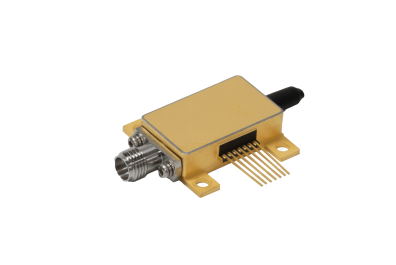
Identifying the Root Causes of Constellation Distortion
The primary challenge in high-order QAM implementation is maintaining the precise spatial relationship between constellation points. An IQ modulator essentially combines two Mach-Zehnder modulators (MZMs) with a 90-degree phase shift between them. Any deviation from this perfect orthogonality results in "IQ imbalance." In our experience with B2B system design, we frequently find that phase errors and amplitude imbalances are the leading causes of system failure during the integration phase.
Phase error occurs when the relative phase between the In-phase (I) and Quadrature (Q) branches is not exactly 90 degrees. This causes the constellation to "skew," making it difficult for the digital signal processor (DSP) at the receiver to distinguish between neighboring states. Amplitude imbalance, on the other hand, occurs when the optical power in the I-branch does not match the Q-branch, resulting in a rectangular rather than a square constellation. At Liobate, we focus our engineering efforts on the structural symmetry of our Thin Film Lithium Niobate chips to ensure these errors are minimized at the physical layer, reducing the computational burden on the DSP.
Mitigating DC Drift and Bias Instability in TFLN Devices
Perhaps the most persistent "implementation error" in optical modulation is the drift of the bias point. Standard Mach-Zehnder modulators must be biased at specific points—usually the "Null" point for carrier-suppressed signals—to function correctly. Over time, environmental factors like temperature fluctuations and accumulated charges can cause this bias point to shift. This is known as DC drift.
In a high-order QAM setup, bias drift leads to carrier leakage and constellation rotation, which can completely collapse the communication link. By utilizing our proprietary TFLN Devices, we have significantly improved bias stability compared to legacy bulk components. The thin-film architecture allows for better thermal management and reduces the volume of material susceptible to charge trapping. Furthermore, our modulators are designed to work seamlessly with automated bias control (ABC) circuits. We provide the necessary monitor photodiodes (MPD) integrated directly on the chip, allowing for real-time feedback and correction of any residual drift, ensuring that the IQ modulator remains at its optimal operating point throughout its lifecycle.
Solving Velocity Mismatch and Frequency Response Issues
For high-baud-rate applications, the synchronization between the electrical RF signal and the optical carrier is paramount. An implementation error often overlooked is the frequency-dependent loss and velocity mismatch within the modulator's electrodes. If the electrical signal "lags" or "leads" the optical wave, the modulation efficiency drops, and the signal suffers from high-frequency roll-off. This manifests as a blurred constellation where the outer points—which require the most power and bandwidth—become indistinguishable.
We address this at Liobate through advanced "Traveling Wave" electrode designs tailored for the Thin Film Lithium Niobate platform. Because the refractive index of TFLN is lower than that of bulk LiNbO3, it is naturally easier to achieve velocity matching between the microwave and the light wave. Our IQ modulators support symbol rates well into the 100 Gbaud range, offering a flat electro-optic response. This ensures that even for 64-QAM signals, where the distinction between levels is minute, the transition between states is sharp and jitter-free. Providing a clean analog bandwidth is how we help our B2B clients avoid the "eye-closure" effects that plague lower-quality modulation hardware.
Overcoming Insertion Loss and Signal-to-Noise Ratio Limits
In long-haul optical networking, the Optical Signal-to-Noise Ratio (OSNR) is the currency of the system. High-order QAM formats are inherently more sensitive to noise because the distance between constellation points is smaller. An implementation error that can jeopardize an entire project is failing to account for the insertion loss of the IQ modulator. High loss necessitates higher laser power or more optical amplification, both of which introduce noise and non-linearities into the fiber.
Our TFLN platform is specifically engineered to achieve low insertion loss, typically under 5 dB for complex IQ structures. By utilizing high-index-contrast waveguides, we can keep the light tightly confined, reducing scattering losses at the bends and junctions within the IQ modulator. This efficiency allows our partners to maintain a higher OSNR, which is the key to extending the reach of 400G and 800G links without the need for expensive regenerators. When we provide a modulator with lower loss and higher linearity, we are essentially giving the system designer more "link budget" to work with, which is a critical competitive advantage in the B2B space.
The Liobate Advantage: Precision Manufacturing for B2B Scale
Success in high-order QAM implementation is not just about the design; it is about consistency. At Liobate, we function as a full-service Integrated Device Manufacturer (IDM). This means we control the process from the initial thin-film deposition to the final high-speed packaging. For our B2B clients, this translates to high uniformity across every batch of TFLN Devices. Implementation errors are often the result of "component variance"—where one modulator performs differently than the next. Our rigorous wafer-scale testing ensures that parameters like extinction ratio, and IQ phase error are within tight tolerances.
Our IQ modulators are optimized for the C-band and feature low driving voltages (typically < 3.5V at 100GHz), making them compatible with modern high-speed DACs (Digital-to-Analog Converters) and drivers. We also provide comprehensive documentation and Spice models to help our clients simulate the modulator's performance within their specific system architecture. This level of support ensures that common implementation errors are identified and corrected in the design phase, rather than during a costly field deployment.
Conclusion: Future-Proofing Optical Networks with TFLN
In summary, while the challenges of high-order QAM are significant, they are not insurmountable. By addressing IQ imbalance, DC drift, and bandwidth limitations at the material level, we enable our clients to push the boundaries of optical communication. The transition to TFLN Devices represents the most effective way to eliminate the implementation errors that have historically held back the scaling of complex modulation formats.
At Liobate, we remain dedicated to the advancement of integrated photonics. Our IQ modulator solutions are designed to be the reliable heartbeat of next-generation networks, providing the precision and stability required for a 1.6T future. We invite you to explore how our TFLN technology can simplify your implementation process and enhance the performance of your high-speed optical systems. Together, we can ensure that the quantum and coherent networks of tomorrow are built on a foundation of absolute precision.


 The previous article
 Returns the list