In the competitive landscape of high-capacity networking, timing is everything. For B2B infrastructure providers, the decision to adopt a new material platform isn't just a technical upgrade—it’s a strategic pivot. While Silicon Photonics (SiPh) and Indium Phosphide (InP) have served the industry well for 100G and 400G cycles, the impending arrival of 1.6T and 3.2T architectures is forcing a re-evaluation of the foundational hardware. The TFLN photonic chip has moved from an R&D curiosity to a commercial imperative, but the question remains for many CTOs: When is the right moment to migrate?
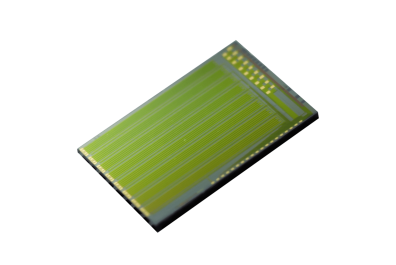
At Liobate, we work closely with data center operators and telecommunications giants to identify the performance "inflection points" where legacy materials fail and Thin-Film Lithium Niobate becomes the only viable path forward. This article outlines the key triggers that signal it is time to transition your infrastructure to tfln chips.
1. When Your Baud Rate Requirements Surpass 100 GBd
The primary driver for migrating to a TFLN photonic chip is the "Bandwidth Wall." As the industry moves toward 800G and 1.6T transceivers, the required symbol rates (baud rates) are skyrocketing. Standard Silicon Photonics modulators often face significant signal roll-off as they approach 100 GHz, primarily due to the carrier-depletion effect and inherent material speed limits.
If your roadmap includes 200G-per-lane or 1.6T/3.2T total throughput, the transition to tfln chips becomes a necessity. Liobate components are engineered to support 3dB-bandwidths exceeding 110 GHz without the steep penalty in optical loss seen in silicon. When your system architecture can no longer compensate for the frequency-dependent loss of legacy modulators, TFLN provides the headroom required for the next decade of scaling.
2. When the "Power Wall" Limits Your Port Density
For modern hyperscale data centers, power density is the ultimate constraint. Traditional modulators often require high-voltage drivers to maintain signal integrity at high speeds, which generates excessive heat. This heat requires larger cooling solutions, which in turn reduces the number of ports you can fit on a single front-panel line card.
A transition to the TFLN photonic chip platform offers a dramatic reduction in power-per-bit. Because our TFLN technology enables a much higher electro-optic coefficient in a compact form factor, we can achieve ultra-low drive voltages. This "CMOS-compatible" voltage allows for the elimination of bulky, power-hungry external drivers in some configurations. If your infrastructure is currently hitting a thermal ceiling that prevents you from increasing port density, migrating to Liobate TFLN solutions is the most effective way to break the "Power Wall."
3. When Long-Term Bias Stability and Reliability are Non-Negotiable
In the B2B world, the total cost of ownership (TCO) is heavily influenced by reliability and maintenance. One of the historical concerns with Lithium Niobate was the tendency for the bias point to "drift" under DC stress, requiring complex feedback loops and periodic recalibration.
However, if your current infrastructure suffers from high maintenance costs or signal degradation over time, it is time to look at the advancements made by Liobate. We have developed proprietary technologies that successfully eliminate the DC bias-drift problem. By providing a stable, repeatable bias point, our tfln chips reduce the complexity of your control electronics and software. If your current optical links require frequent manual intervention or complex algorithmic corrections to stay stable, migrating to our stabilized TFLN platform will significantly lower your operational overhead.
4. When Moving Toward Co-Packaged Optics (CPO) and AI Fabrics
The rise of Artificial Intelligence (AI) and Machine Learning (ML) workloads has fundamentally changed data center traffic patterns. These workloads exhibit "all-to-all" communication, requiring massive bandwidth between GPUs and accelerators. To meet this demand, the industry is moving toward Co-Packaged Optics (CPO), where the optical engine is moved closer to the switch ASIC.
Migration to a TFLN photonic chip is ideal for CPO architectures because of its small footprint and high efficiency. Unlike Silicon Photonics, which often requires a high-power external laser source to compensate for internal material losses, TFLN’s high transparency allows for a more efficient link budget. If your organization is currently designing AI clusters or next-generation fabric switches, incorporating tfln chips early in the design cycle ensures that your hardware won't be obsolete by the time it reaches mass deployment.
Conclusion: Strategic Migration for Competitive Advantage
Migration to a new technology platform is never without its challenges, but for those operating at the bleeding edge of telecommunications and data center infrastructure, the cost of staying with legacy materials is becoming too high. Whether it is the need for 100 GHz+ bandwidth, the demand for sub-1V power consumption, or the requirement for rock-solid bias stability, the TFLN photonic chip is the answer.
At Liobate, we offer the expertise and the production-grade capacity to make this migration seamless. We provide a vertically integrated approach, from raw wafer to packaged module, ensuring that your transition to tfln chips is backed by world-class engineering and a reliable supply chain.
The window for early-mover advantage in the 1.6T era is now. By integrating Liobate TFLN technology into your next infrastructure cycle, you aren't just keeping up with the industry—you are setting the pace for the future of global connectivity. Explore our technical documentation and product list today to determine your specific migration timeline.


 The previous article
 Returns the list