In the rapidly evolving world of high-speed data transmission, we are witnessing a fundamental architectural pivot. For decades, the industry relied on discrete optoelectronics—individual components such as bulk modulators, lasers, and detectors manually assembled onto fiber-optic boards. However, as we approach the physical and thermal limits of traditional infrastructure, we find that the demand for 1.6T and 3.2T bandwidth requires a more sophisticated approach. This is where integrated photonic chips have moved from a theoretical advantage to an operational necessity.
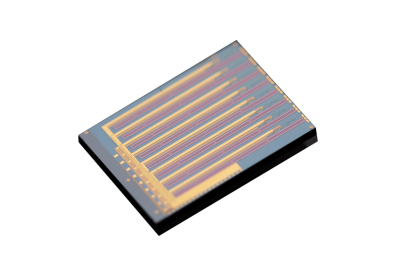
At Liobate, we have positioned ourselves at the forefront of this transition by leveraging Thin-Film Lithium Niobate (TFLN). By moving away from the "discrete" era into the "integrated" era, we are helping B2B partners in the data center and telecommunications sectors overcome the bandwidth bottlenecks that once seemed insurmountable.
Understanding the Structural Divide: Discrete vs. Integrated
To appreciate the value of integrated photonic chips, we must first look at the structural limitations of discrete optoelectronics. Discrete systems are characterized by "component sprawl." In a traditional setup, an electro-optic modulator is a standalone unit, often bulky and requiring high driving voltages. These components are connected via fiber patches or gold wire bonding, which introduces several points of failure and significant signal attenuation.
In contrast, our tfln chips utilize a monolithic or heterogeneous integration approach. We take the high-performance electro-optic characteristics of the lithium niobate crystal and shrink them down to a nanometer-scale thin film on an insulator. This structural change allows us to fabricate multiple photonic functions—such as waveguides, splitters, and modulators—onto a single substrate. For our B2B clients, this translates to a massive reduction in physical footprint and, more importantly, a dramatic increase in reliability.
The Technical Edge of Liobate TFLN Chips
The primary reason we advocate for the shift toward TFLN-based integration is the superior material science involved. Traditional bulk lithium niobate was effective but physically limited; it was too large for the high-density requirements of modern pluggable transceivers. By developing the Liobate TFLN platform, we have unlocked a "best-of-both-worlds" scenario: the world-class electro-optic efficiency of LN with the scalability of silicon-style fabrication.
When we examine the specifications of our current product lineup, the advantages become quantifiable. Our tfln chips are designed to meet the most demanding standards of the next generation of ICT:
1.6T DR8 / 800G DR4 Solutions: These chips offer a 3dB bandwidth of 70 GHz with a half-wave voltage of less than 2V.
3.2T DR8 High-Performance Chips: For ultra-high-capacity needs, we provide a 3dB bandwidth of 110 GHz with a differential half-wave voltage of less than 1.5V.
Low Insertion Loss: By optimizing our proprietary etching processes, we maintain an insertion loss of less than 5 dB for intensity modulator die chips, ensuring signal integrity across long-haul and DCI links.
By integrating these high-spec components into a single chip, we eliminate the parasitic capacitance and inductance inherent in discrete assemblies. This structural efficiency is what allows us to achieve sub-1-volt driving voltages and bandwidths exceeding 100 GHz—milestones that discrete optoelectronics simply cannot hit without prohibitive power consumption.
Beyond Bandwidth: The B2B ROI of Integration
For our partners in the enterprise and infrastructure space, the decision to switch to integrated photonic chips isn't just about speed; it is about the total cost of ownership (TCO). When we provide an integrated TFLN solution, we are addressing three critical business pain points:
Thermal Management: Discrete components generate localized heat at every junction. In a hyperscale data center, cooling costs can account for nearly 40% of operational expenses. Because our TFLN modulators operate at significantly lower voltages, they generate less heat, allowing for higher density in the rack without a corresponding spike in cooling requirements.
Assembly and Yield: Manually aligning discrete optical components is a labor-intensive process with a high margin for error. Our integrated chips are fabricated using wafer-scale technology, ensuring that every waveguide and electrode is aligned with sub-micron precision during the lithography stage. This leads to higher yields and more predictable performance for system integrators.
Stability and Bias Drift: One of the historic "deal-breakers" for lithium niobate was bias drift. We have developed proprietary technologies at Liobate that successfully eliminate this effect. Our integrated chips demonstrate highly stable and repeatable bias points, reducing the need for complex, power-hungry digital signal processing (DSP) compensation algorithms.
Future-Proofing with Integrated Photonic Chips
As we look toward the 2026–2030 roadmap, the industry is moving toward Co-Packaged Optics (CPO). In this model, the optical engine is moved directly onto the same package as the ASIC or switch silicon. Discrete optoelectronics are physically incompatible with this vision. Only integrated photonic chips offer the miniaturization required to sit side-by-side with high-performance processors.
We believe that tfln chips represent the most promising platform for this future. Whether it is supporting 260G baud transmission for coherent networks or enabling the next generation of AI-driven interconnects, the structural advantages of TFLN are clear. We have moved beyond the "patchwork" approach of the past. Today, we offer a streamlined, high-performance platform that combines ultra-low loss optical waveguides with ultra-broadband RF circuits.
Conclusion
The structural comparison between integrated and discrete systems reveals a clear winner for the B2B market. While discrete optoelectronics served the industry well during the initial build-out of the internet backbone, the demands of AI, 5G, and global data interconnects require the precision and efficiency of integrated photonic chips.
At Liobate, we are committed to providing the TFLN specialized equipment, chips, and devices necessary to make this transition seamless. By choosing our tfln chips, you are not just upgrading a component; you are adopting a structural architecture designed for the terabit era. We invite you to explore our full product specifications and join us in redefining what is possible in optical communication.


 The previous article
 Returns the list