Thin-film lithium niobate (TFLN) technology has become a cornerstone in high-speed optical communication, offering significant advantages for modern photonics applications. At Liobate, we focus on developing TFLN chips and electro optic modulators that combine ultra-low power consumption with high modulation rates, helping our clients achieve next-generation optical performance. Our solutions, including 1.6T DR8 and 800G DR4 devices, are designed to meet the demanding needs of both research institutions and large-scale data center operators.
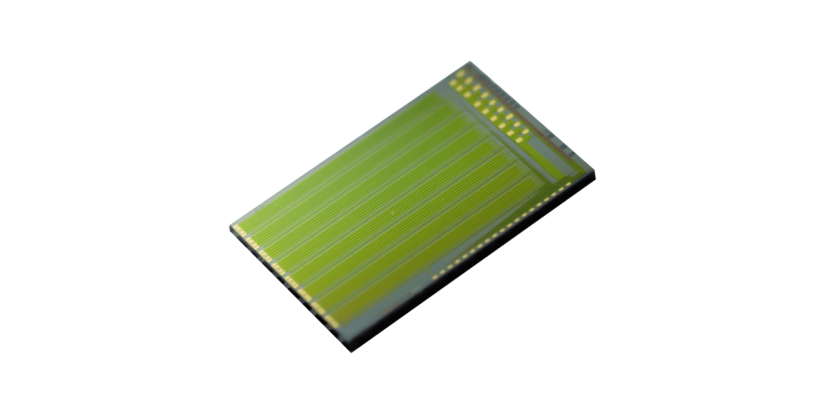
High-Speed Performance and Low-Loss Design
One of the main benefits of TFLN chips is their exceptional high-frequency performance. Liobate modulators provide a 3dB-bandwidth of 70 GHz, ensuring reliable operation in ultra-high-speed scenarios. The insertion loss is maintained below 14 dB, including coupling loss, which significantly reduces signal degradation across long-distance optical links. Our electro optic modulators also achieve a half-wave voltage of less than 2 V (differential), enabling efficient modulation with minimal driving power. These features make our systems ideal for applications in 400G, 800G, and 1.6T optical networks, where low latency and high throughput are critical.
Customization and Flexible Integration
At Liobate, we recognize that different applications require tailored solutions. Our TFLN chips and electro optic modulators support both differential (AC or DC coupling) and single-ended configurations, allowing integration into various photonic platforms. With a DC extinction ratio greater than 25 dB, our modulators ensure precise signal control, which is essential for advanced photonics experiments and AI-driven optical networks. By combining fully customizable design options with proven performance metrics, we help our partners address challenges in quantum technology, Lidar, and micro-wave photonics.
Limitations of Thin-Film Lithium Niobate
Despite its many strengths, thin-film lithium niobate technology also has some inherent limitations. Fabrication of TFLN chips can involve complex processes, which may require specialized cleanroom facilities and experienced personnel. Additionally, while TFLN modulators excel in high-speed applications, they may be less suitable for systems where cost constraints are a primary concern. Awareness of these factors is important when evaluating the overall system architecture and planning integration strategies for emerging technologies.
Conclusion: Balanced Perspective on Liobate Solutions
In conclusion, Liobate provides TFLN chips and electro optic modulators that combine high-speed capability, low power requirements, and flexible integration. With world-class performance parameters such as 70 GHz bandwidth, <14 dB insertion loss, and half-wave voltage <2 V, we empower our clients to explore cutting-edge applications in AI optical communications, high-capacity data centers, and photonic research. While thin-film lithium niobate has some fabrication and cost considerations, its advantages in modulation speed, signal integrity, and adaptability make it a compelling choice for advanced optical systems. By leveraging our expertise, clients can implement reliable, scalable solutions that align with their long-term technological goals.


 The previous article
 Returns the list