Thin film lithium niobate technology has moved from research labs into practical deployment, and discussions around Liobate solutions often center on how TFLN Devices compare with traditional platforms. We see growing demand from engineers who want honest evaluation rather than marketing language. A TFLN modulator is designed for ultra-high-speed optical communication, especially where power efficiency and bandwidth density matter. In real systems, performance is judged by insertion loss, drive voltage, packaging compatibility, and long-term stability. Our work with thin film lithium niobate shows that the technology is not a universal replacement, but a specialized tool that fits advanced optical architectures where signal integrity and scalability are critical.
Performance Advantages in Modern Optical Systems
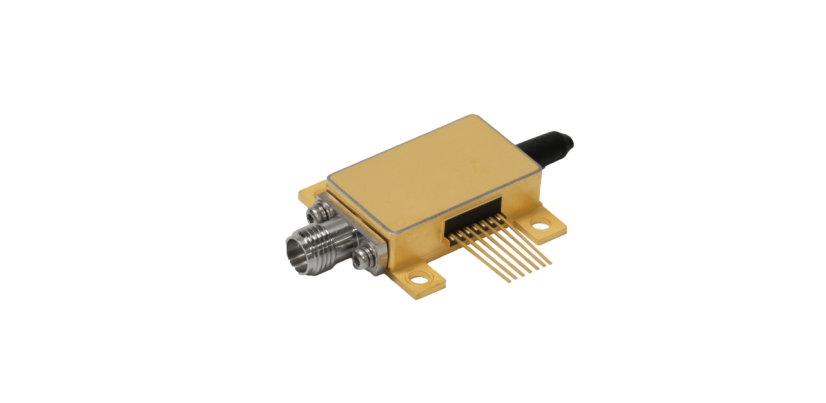
The strongest argument for adopting TFLN Devices lies in their electro-optic efficiency. Thin film lithium niobate enables strong modulation with lower drive voltage, which reduces system energy consumption in dense optical modules. A practical example is our 20/40 GHz Intensity Modulator, engineered with a 3dB-bandwidth of 40 GHz, insertion loss below 4.5 dB, and a half-wave voltage under 3.0 V. These parameters matter because they influence link budget, thermal design, and driver requirements. When a TFLN modulator is integrated into 400G and higher architectures, designers gain flexibility in balancing speed and power. We observe that this efficiency becomes increasingly relevant as AI data infrastructure pushes toward higher lane rates and tighter packaging constraints.
Practical Limitations to Consider
Despite clear benefits, thin film lithium niobate (TFLN) technology is not without tradeoffs. Fabrication complexity remains higher than mature silicon photonics processes, and integration workflows may require specialized alignment and packaging expertise. Supply chains for advanced substrates are still developing, which can influence project timelines in certain regions. Liobate’s engineers emphasize that system-level design adjustments are essential, as driver electronics and RF routing must be carefully matched to the characteristics of a TFLN modulator. These factors do not negate the value of the technology, but they highlight that adoption requires planning, cross-disciplinary coordination, and thorough qualification rather than plug-and-play substitution.
Conclusion: Matching Technology to Application
An honest review shows that thin film lithium niobate is most effective when applied to bandwidth-intensive optical systems that justify its advanced performance profile. Through continued refinement of TFLN Devices, we focus on delivering predictable behavior under real operating conditions instead of chasing theoretical metrics. For teams evaluating a TFLN modulator, the decision should be guided by system architecture, power targets, and integration capability. When those factors align, thin film lithium niobate becomes a practical enabler for next-generation communication hardware. Balanced expectations, combined with clear engineering goals, allow organizations to extract real value from this evolving photonic platform.


 The previous article
 Returns the list