In recent years, photonic chips have become a crucial technology in high-speed optical communication and advanced data processing. At Liobate, we focus on the development of TFLN chips that combine high modulation speed, ultra-low insertion loss, and minimal power consumption. These photonic chips convert electrical signals into optical signals, enabling faster, more reliable data transmission across modern networks. We design our chips to address the growing demand for high-bandwidth and low-latency solutions in data centers, telecommunications, and emerging research fields such as AI-driven optical computing and quantum technologies. Understanding the fundamentals of these devices is key to appreciating how our solutions contribute to the evolution of optical systems.
Key Features of Liobate Photonic Chips
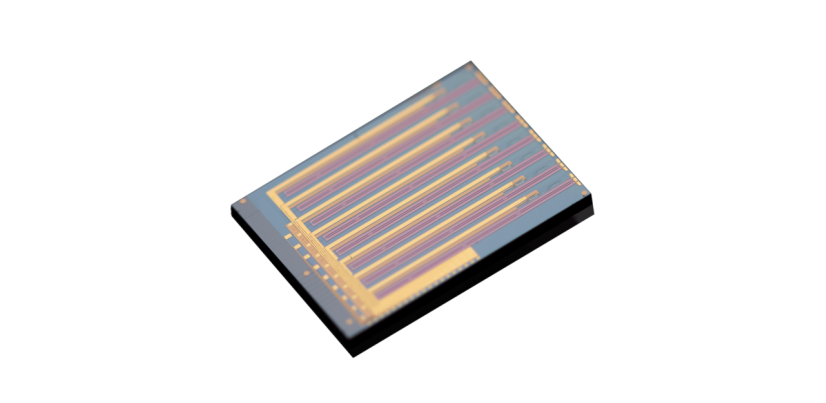
Our photonic chips are engineered to meet demanding specifications for next-generation optical modules. The 3.2T DR8 module, for example, features a 3dB-bandwidth of 110 GHz, insertion loss below 14 dB including coupling loss, and a half-wave voltage under 1.5 V differential. These TFLN chips support differential configurations with AC or DC coupling, and can also operate in single-ended mode. With a DC extinction ratio above 25 dB, these chips maintain high signal quality even in long-distance or high-speed transmission scenarios. At Liobate, we focus not only on raw performance but also on reliability and integration flexibility, allowing our photonic chips to meet the specific needs of data centers, communication equipment manufacturers, and research institutions.
Applications and Industry Value
We see our photonic chips applied in multiple cutting-edge domains. AI optical communications, Lidar systems, and quantum research all benefit from our TFLN chips, which enable ultra-high-speed modulation and low-loss signal transmission. At Liobate, we work closely with clients to integrate these chips into co-packaged optics (CPO) systems and microelectronic-photonic hybrid platforms, enhancing data throughput and reducing system energy consumption. Our chips also support high-density optical networks and next-generation sensors, helping organizations overcome bandwidth bottlenecks and meet the increasing demand for real-time processing. By combining advanced material science and precise engineering, we provide solutions that align with the technical needs of both industrial and academic users.
Conclusion: Advancing Photonic Technology
In conclusion, photonic chips are fundamental to modern optical networks and high-performance computing. At Liobate, our proprietary TFLN chips—such as the 3.2T DR8—offer high bandwidth, low insertion loss, and superior modulation efficiency. We continuously improve our design and fabrication processes to deliver chips that not only meet international standards but also support specialized applications in AI, Lidar, and quantum research. By integrating our photonic chips into optical modules, we enable clients to enhance data transmission speed, ensure stable performance, and explore innovative solutions for future technologies. Our commitment is to provide practical, high-performance devices for B2B customers who require both technical precision and real-world reliability.


 The previous article
 Returns the list